

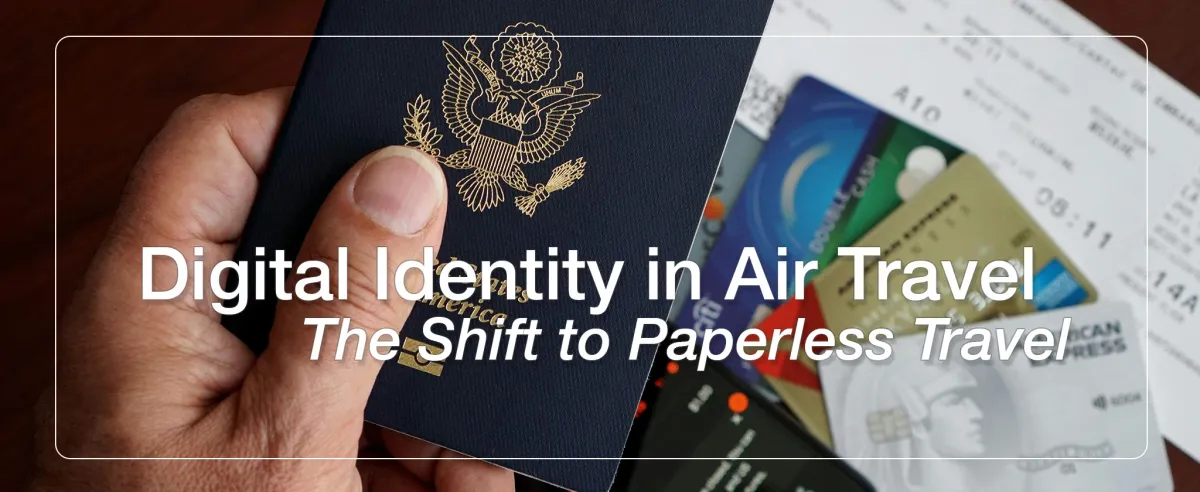
Air travel has the potential to lose its paperwork in the near future.
The airport experience and routines have barely changed. Of course, we got rid of paper tickets a couple of decades ago, but the rest of it is passport in hand, boarding pass ready, and the same identity check repeated at every step. It slows the journey and adds friction and aggravation where none is needed.
That is now on the verge of change.
The International Air Transport Association (IATA) has completed real-world Proofs of Concept (PoCs) showing that digital identity can replace paper documents and reshape the airport experience. The idea is simple. Your identity lives securely on your phone. You share it once, with your consent, and from that point on, biometrics becomes your verification.
No repeated checks. No unnecessary pauses. Just a journey that moves.
Table of Contents
What This Means for You: A Seamless Airport Experience
Picture an airline trip of the future.
You arrive at the terminal. There is no need to reach for your passport or boarding pass. Your identity already sits securely on your phone. Your biometrics become your confirmation.
Before leaving home, you consent to share your identity details securely, using trusted digital wallets such as Apple Wallet (currently for US passport holders) or Google Wallet (both US and UK passport holders), as well as national systems like Digi Yatra in India

By the time you reach the airport, the system already knows who you are. At check-in, baggage drop, security, and boarding, biometric verification replaces manual document checks. There is no repeated stopping. No constant handling of documents. You simply move forward.
The journey feels lighter. Faster. Almost uninterrupted.
Why Digital Identity Matters in Modern Air Travel
Today’s travel experience still depends heavily on paper. Passports, boarding passes, and repeated identity checks that create friction, frustration and aggravation at every stage of the journey.
Digital identity has the potential to remove that repetition. Your identity is verified once and then reused throughout your trip. Your data is shared securely in advance, allowing airlines and airports to complete checks before you arrive. Queues become shorter. Bottlenecks ease. The entire airport experience becomes more efficient.
Security also improves. Digital identity, supported by biometrics, is far more difficult to manipulate than physical documents.
This is not just about convenience. It is a complete shift in how air travel works.
Interoperability: The Key to Seamless International Travel
The real breakthrough is cooperation.
Airlines, airports, governments, and technology providers worked together across multiple countries. The trials proved that one digital identity can function across different airlines, airports, and borders.
IATA refers to this as interoperability. It means a traveller can start a journey in one country, transit through another, and arrive in a third without repeatedly proving identity. Different systems can connect. Different platforms can exchange data securely.
This is the foundation of seamless international travel.
Real-World Trials: Digital Identity in Action
These were not simulations. Passengers travelled from Tokyo to Hong Kong and onward to Europe. Others flew between Auckland and Hong Kong. In India, travellers used digital identity from airport entry to boarding.
Across all these journeys, one pattern was clear: identity data was shared once, verified biometrically, and reused throughout the journey. There was no need to present documents again and again. The process became continuous.
Less interruption. More flow.
The Future of Air Travel: What Still Needs to Happen
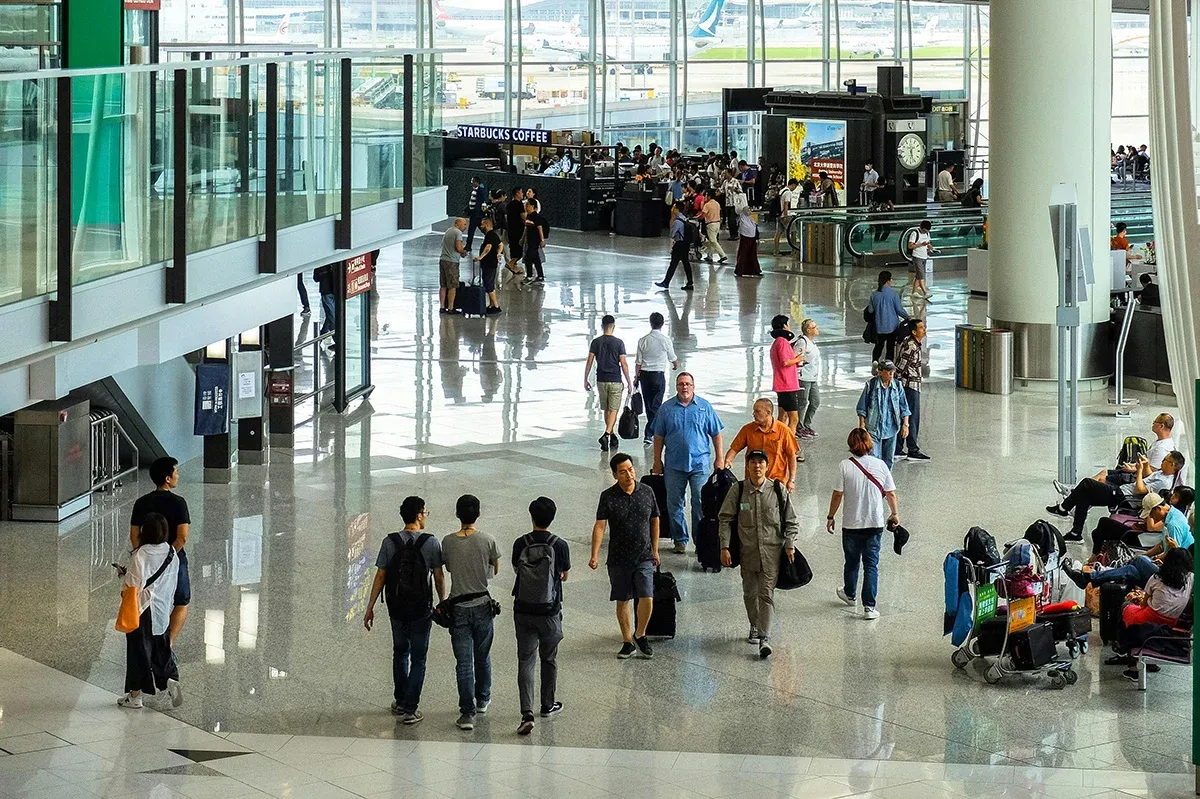
The technology is ready. IATA's successful POCs demonstrated that contactless, biometric-enabled international travel is already achievable with digital identity replacing paper documentation. The next steps depend on governments.
Countries must begin issuing digital passports, also known as Digital Travel Credentials (DTC). They must also accept these credentials from other countries and ensure their border systems can process them. This requires legal frameworks, global standards, and international cooperation.
Paper passports will remain for now. They are essential to ensure accessibility for all travellers. But their role will gradually reduce as digital identity becomes more widely accepted.
Final Thought: The Rise of Paperless Travel
International Travel has always been about movement across borders. Never have such large numbers of people travelled as they do today. Now, the systems behind travel are learning to move just as smoothly. Less paper. Fewer interruptions. A journey that flows from start to finish.
The physical passport is not disappearing tomorrow. But its digital twin is already in motion.
What Travellers Are Asking
As digital identity begins to enter everyday travel, a few practical questions naturally come up.
What exactly is digital identity in air travel?
Will this replace passports completely?
Is biometric travel safe?
When will this become common?
Do you need a special app?
© Mano Chandra Dhas
If you found this useful, leave a comment below. I read and reply to every message.
Share this with someone who might benefit.
Subscribe for practical insights, travel ideas, and real-world perspectives.
Photo credit: Pexels – Dave Garcia, Cottonbro, and Airteo